
Wearable devices are utilized in health and safety monitoring, chronic disease management, disease diagnosis, treatment, and rehabilitation (see madmuscles user feedback Table 5). They facilitate connections between doctors, patients, and other parties, enabling real-time monitoring, pain alleviation, and data collection. Examples include monitoring older adults’ gait, heart rate, and fall detection, tracking children’s activities, health monitoring for pregnant women, symptom monitoring during treatment, and disease-specific applications like diabetes management and hypertension monitoring. For the initial search, all study types will be included to ensure that no randomized controlled trials are missed. However, the studies included in the final review will be refined to include only RCTs.
Measured anthropometry and physical activity outcomes and effect size of included studies. The authors would like to thank Netfront Pty Ltd for programming and web and mobile development. The authors would also like to thank Christopher Lai for his assistance with data cleaning and the many students and teachers who participated in the development and testing process. The funders had no role in the study design, data collection and analysis, decision to publish, or preparation of the manuscript. The Health4Life Team (collaborative group) includes Nicola C Newton, Tim Slade, Katherine Mills, Matthew Sunderland, Belinda Partmenter, Bonnie Spring, David Lubans, Steve Allsop, Leanne Hides, Nyanda McBride, Lexine Stapinski, and Louise Birrell.
Free Guide: The 18 Most Influential Behavioral Economics Books (2026 Edition)
Moreover, the incorporation of gamification elements and social connectivity features enhances user engagement and motivation, fostering a sense of community and accountability [81]. McGuigan in [20] conducted a 12-week repeated-measure experimental study to explore the influence of wearable sleep trackers on sleep quality and deep sleep metrics. Participants in the study were provided with wearable devices that monitored their sleep patterns and provided personalized sleep recommendations.
6. Data analysis
The included studies were all conducted in high-income countries where the health care systems are different from many low- and middle-income countries, which limits the ability to draw generalizable conclusions [66]. The inclusion of studies targeted at the adult population could also confine interpretations about whether app-based interventions can influence behavior change among younger users. One of the primary benefits of apps is their potential for incredibly high reach. With mobile phone use reaching near saturation among some populations, particularly young adults, and the high rates of consumer acceptability, app effectiveness research must also consider total app reach.
Raising Resilient Adolescent Girls in a Digital Culture
Through statistical measurements and related works, our work explores the trends over a span of two decades, from 2000 to 2023, to understand the evolving landscape of behavior change techniques in wearable and IoT technologies. A specific focus is placed on a case study examining the application of behavior change techniques (BCTs) for monitoring vital signs using wearables, underscoring the relevance and urgency of further investigation in this critical intersection of technology and human behavior. A systematic and transparent review of the literature will provide a better understanding of current state-of-the-art mobile health apps, how they are being used, and to what effect. Strengths, limitations, and implications for the interaction of technology and behavioral health management will help inform and improve the development, acceptability, and effectiveness of future mobile health apps.
In total, 14 studies had quite small sample sizes, and their findings must be interpreted with caution. Trials of larger sample size and longer intervention duration or follow-up time are warranted to assess effectiveness of mobile phone app interventions. The quality of the included studies in terms of high risk of bias in selection, performance, detection, or attrition, and the quality of reporting of the interventions in some of the articles also calls for more rigorous study design and reporting.
Do Habit Tracking Apps Actually Work Long-Term, or Do People Stop Using Them?
- Individuals can be allowed to customize not only the frequency at which reminders are sent to them (how often), but also the type of reminder (pop up boxes, text message, sounds etc.) and when it should be sent (time).
- AThe core of the BCW is the COM-B model, but they are reported separately here in line with what the studies reported.
- Long-term monitoring enables early diagnosis of chronic diseases and other health risk factors.
- This may give you a deeper insight into your health, and how factors like different medications, treatments, or triggers may be affecting it.
- As such, we implemented only the most central features for reporting behavior and delivering interventions.
- Users with mental health issues need to enter their personal data manually which indeed is a major limitation.
This results in a substantial number of apps that are not perceived as credible and trustworthy. The study highlights the importance of developing a specific taxonomy to evaluate BCTs in wearables and recommends customization of BCTs based on targeted populations to effectively promote physical activity. This helps us understand that specific behavior change techniques need to be tested on the intended audience since they vary from individual to individual, yet they are still effective stimuli. Therefore, there is a need for both an update and an expansion of these reviews, to reveal the current state of mobile health app technology, to consider the effectiveness, and to consider the behavioral change techniques that drive positive change. An overview of the different types of cutting-edge mobile app technologies and their uses will make it easier to identify the behavioral change techniques and strategies that may be most effective at engaging participants and improving health behaviors and outcomes.
The EPPM indicates that fear affects intentions only as mediated by perceived threat [33,40]. However, this experiment indicated that fear influences intentions directly, as well as in interaction with self-efficacy. In a study by Popova [40], high perceived efficacy and presence of fear influenced danger control outcomes (high intentions), although mediated by perceived threat. First, in our model perceived threat did not mediate the relationship between fear or self-efficacy and intentions. Second, we found the opposite interaction between fear or self-efficacy and intentions.

Lift of the best research-informed mental health apps
Developed and maintained by registered dietitians, tracking couldn’t be easier thanks to the voice control feature that allows users to log daily food intake and exercise. Users can easily share food logs with their health care provider or coach by using the Track Pro Coach portal. After testing dozens of health apps IRL, our registered dietitians and fitness experts in the Good Housekeeping Institute are sharing their favorites for 2023.
Data Extraction
These apps utilise guided meditations and mindfulness exercises to train attention and emotional regulation. This practice aligns with principles of cognitive behavioural therapy (CBT), which emphasises the role of thoughts in shaping emotions and behaviours. The clear interface and direct approach make it appealing to those who appreciate straightforward, actionable tools. The focus on daily habits makes it highly practical for integrating new routines into any busy schedule.
Persuasive Strategies and Type of Mental Health Issues Targeted
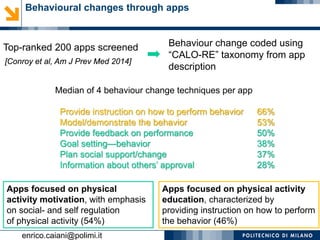
Outcomes that were not significantly different between groups, had no significant effect, or were significantly worse than the comparator were coded as having no evidence supporting them. Limitations and future directions for research and development were also identified. A preliminary literature review resulted in the first search equation, which aimed to find the different applications of mHealth in personalized medicine. This allowed us to identify relevant keywords and search terms to refine the search equation in each iteration by focusing on relevant topics such as adherence and data reporting but without limiting it to the field of personalized medicine. Finally, behavior change was found to be a popular aspect of improving adherence and hence the effectiveness of studies. We only included the term “behaviour change” because it is not limited to techniques, as there are different theories and models that contain them.
Data Extraction and Coding of BCTs
Only 2 apps implemented reward by allowing users to unlock more contents (such as more meditation sessions, or more lessons and activities) as a way of rewarding users. With respect to the Praise strategy, only 7 apps employed praise as words (i.e., Well Done) (6 apps) and colorful confetti (1 app). Furthermore, to stimulate PA, diverse BCTs can be embedded in wearables, with likely varying outcomes for promoting PA.
Functionality Review and Rating
Moreover, according to Alqahtani and Orji (2019), users with mental health issues complained about lack of guidance when using mental health apps which impair concentration and make them be easily frustrated. Therefore, reduction and tunneling strategy are essential for mental health apps. Overall, the mental health apps reviewed in this paper employed 26 persuasive strategies, a range of 1 to 10 per app.
The most common method of measuring engagement (11/28 studies) was through app usage data (e.g., frequency, duration). Other methods included surveys, qualitative methods, app-collected data (active or passive), and data from synced devices (e.g., activity trackers and smart pill bottle caps, Table 5). Many of the studies that used qualitative methods were focused on user-centered design or early-stage usability or feasibility testing. The quality appraisal was conducted using the Cochrane Collaboration Risk of Bias 2 (RoB 2) tool for randomized controlled trials (RCTs) (Higgins et al., 2011; The Cochrane Collaboration, 2021) and the Mixed-Methods Appraisal Tool (MMAT) (Hong et al., 2018). The MMAT tool was used instead of the ROBINS-I tool (Sterne et al., 2016) because it could be applied to the wide range of study types included in the review. Digital wellbeing tools that complement these apps, screen time managers, sleep trackers, social media blockers, can address the environmental conditions that undermine mental health rather than just the symptoms.